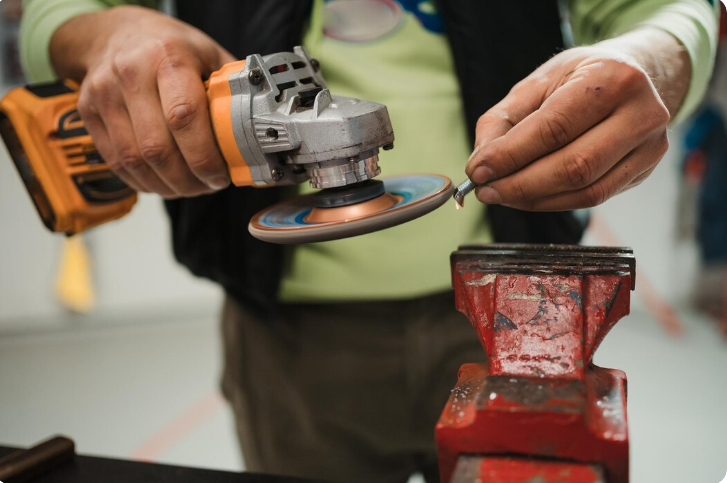

Walk through enough prep bays and you start to notice the same pattern. Shops are getting pickier about consumables. That includes sanding discs. For years, plenty of panel shops treated discs as a simple cost line: buy what is cheap, run through them fast, and replace them when the cut drops off. That thinking is changing. More workshops are moving towards ceramic options because they are looking at time on the job, finish consistency and how much production gets slowed down by clogged, worn-out discs.
That is where ceramic sanding discs are getting more attention. In a busy panel shop, the real cost is not just what a box of discs costs at the counter. It is how long a tech spends shaping filler, feathering edges, flattening primer and swapping out discs that have stopped cutting properly halfway through the job. If the abrasive keeps cutting cleanly for longer, the workflow stays smoother. That matters on small repairs, but it matters even more on high-throughput work where every delay starts stacking up.
Ceramic discs suit the jobs that chew through ordinary abrasives. Filler shaping is one. Primer prep is another. Feather edging around repair zones is another again. These are the stages where a weak disc starts to glaze, load up or lose bite, and once that happens the operator usually leans harder on the sander to compensate. That is when finish quality starts slipping. You get inconsistency, extra heat and a scratch pattern that is harder to control. A better disc does not fix bad technique, but it does make it easier to keep the process under control.
Dust is another reason shops are making the switch. Anyone who has spent time in a prep area knows how quickly sanding dust gets into everything. It loads the abrasive, sits between the disc and the panel, and turns clean sanding into messy guesswork. Newer ceramic discs are generally built with better dust extraction in mind, especially in multi-hole formats used with decent backing pads and extraction. That means less rubbish trapped under the disc, a cleaner surface to inspect, and fewer wasted passes trying to correct what should have been a straightforward prep stage.
There is also a practical buying reason behind the shift. Shops are tired of stocking consumables that only look cheap on paper. A disc that costs less upfront but burns out early is not always the economical choice. Owners and production managers are looking more closely at usable life, not shelf price. They want to know how many panels they can get through before performance drops away. They also want fewer mid-job interruptions. That is why more buyers now keep a proper spread of automotive sanding discs on hand instead of relying on one all-purpose option for every stage of a repair.
That said, ceramic is not the answer for every single sanding task in the workshop. It shines in aggressive prep and high-use applications, but that does not mean you need it for every fine finishing step. Plenty of shops still use other disc types for lighter work, finer grits and cost control. The smart move is matching the abrasive to the stage of the repair. Use ceramic where cut speed, durability and dust control actually pay you back. Use other options where the job does not demand that level of performance.
The panel shops getting this right are usually the ones treating abrasives like part of the process, not just another consumable order. They look at the full prep chain. What are the techs sanding most often? Where do discs clog? Where does finish quality fall away? Where are the wasted minutes? Once you start looking at it that way, the move towards ceramic makes sense. It is less about trend and more about reducing friction in the workshop.
That is why ceramic discs are showing up in more Australian prep bays. They help with the heavy lifting, they hold their cut better, and they make the sanding stage feel less stop-start. For shops trying to tighten workflow without compromising finish quality, that is a pretty solid reason to switch.