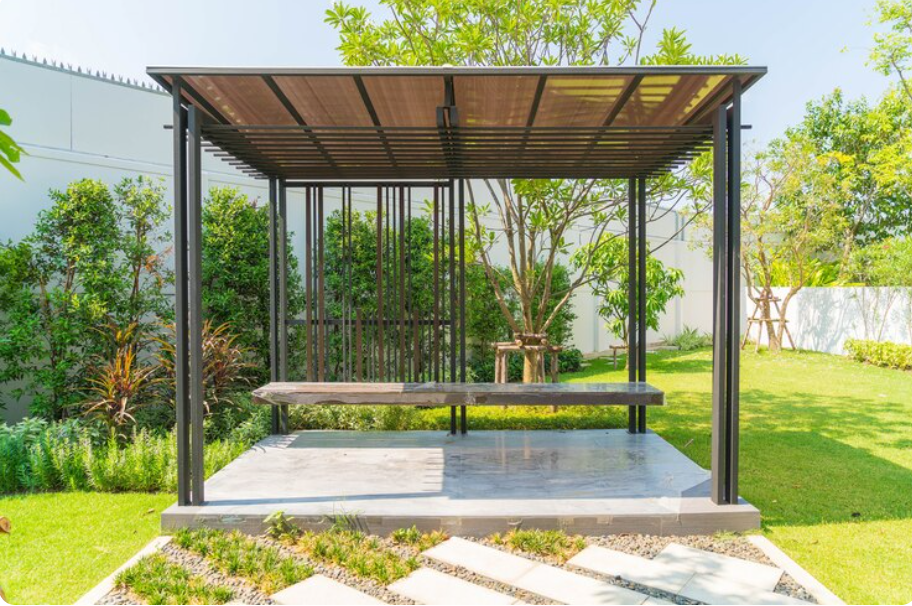

The 12′ x 20′ Outdoor Patio Hardtop Gazebo improves outdoor environments by creating structured comfort zones. This structure supports daily outdoor living activities with stable protection in varying weather conditions. Homeowners use it to extend usable living space beyond interior walls. It creates a controlled shelter for dining, resting, and social interaction. The structure enhances backyard functionality across different weather conditions through improved shading and coverage design. Many residential designs integrate it for lifestyle expansion and spatial balance. Its size supports medium to large outdoor layouts effectively. The design improves comfort while maintaining open-air aesthetics. It also increases property usability without permanent architectural expansion. Outdoor living becomes more flexible and organized through this solution.
Structural Engineering Design of the Outdoor Patio Hardtop Gazebo System
The 12′ x 20′ Outdoor Patio Hardtop Gazebo relies on reinforced aluminum framing for stability. Engineers design load distribution systems to handle wind pressure efficiently. Structural joints use high-strength connectors for long-term durability. Roof beams distribute stress evenly across the entire frame. Powder coating improves corrosion resistance in outdoor environments. Anchoring systems secure the structure firmly to ground surfaces. Drainage channels prevent water accumulation on roof sections. The design reduces deformation risks under seasonal stress conditions. Wind resistance improves through optimized geometry and material selection. Engineering precision ensures long-term structural reliability in varied climates.
Material Performance Advantages in the Outdoor Patio Hardtop Gazebo Structure
The 12′ x 20′ Outdoor Patio Hardtop Gazebo uses steel or polycarbonate roofing systems. These materials improve resistance against UV exposure and precipitation. Steel panels provide strong impact resistance during storms. Polycarbonate sheets offer lightweight flexibility and light diffusion. Thermal control reduces heat buildup beneath the roof. Anti-corrosion coatings extend material lifespan significantly. Rainwater flows efficiently due to angled roof design. Snow load resistance supports winter usability in colder regions. Material selection directly affects long-term durability performance. These combined features ensure consistent protection across different environments.
Space Optimization Strategies with the Outdoor Patio Hardtop Gazebo Layout
The 12′ x 20′ Outdoor Patio Hardtop Gazebo improves spatial organization in outdoor areas. Designers divide internal space into functional zones. Dining areas fit naturally within central layouts. Lounge sections work well along perimeter spaces. Movement pathways remain open and unobstructed. Furniture placement follows proportional spacing principles. Lighting systems enhance evening usability and visibility. Acoustic balance improves communication comfort under the roof. The structure supports both private and group activities. Outdoor spaces become more efficient and visually structured.
List of common layout applications:
- Outdoor dining area with table and chairs
- Relaxation lounge with sofas and cushions
- Garden reading or meditation corner
- Poolside shaded seating zone
- Outdoor entertainment and social gathering space
Each application improves usability and comfort. The layout flexibility increases overall outdoor lifestyle value. Spatial planning ensures efficient use of available area. Functional zoning enhances daily practicality significantly.
Installation Process and Structural Setup for the Outdoor Patio Hardtop Gazebo
The 12′ x 20′ Outdoor Patio Hardtop Gazebo requires stable ground preparation before installation. Installers evaluate soil or deck strength for load capacity. Concrete bases provide maximum stability for long-term use. Assembly begins with base frame alignment. Upright posts must remain level during installation. Roof panels are secured after frame stabilization. Safety equipment ensures installation protection. Two-person teams improve assembly efficiency. Torque tools ensure secure fastener tightening. Final inspection confirms alignment and structural integrity accuracy.
Maintenance Practices for the 12′ x 20′ Outdoor Patio Hardtop Gazebo Longevity
The 12′ x 20′ Outdoor Patio Hardtop Gazebo requires routine maintenance for long-term performance. Roof cleaning prevents dirt and debris buildup. Frame inspection detects early corrosion signs. Protective coating maintenance improves surface durability. Seasonal checks ensure structural stability after weather changes. Drainage systems must remain unobstructed. Snow removal reduces load stress during winter. Fasteners require periodic tightening for safety. Lubrication improves connector movement stability. Maintenance consistency extends overall service life significantly.
Cost Efficiency Evaluation of the 12′ x 20′ Outdoor Patio Hardtop Gazebo Investment
The 12′ x 20′ Outdoor Patio Hardtop Gazebo provides long-term value through durability and usability. Initial investment reflects structural strength and material quality. Maintenance costs remain lower than soft-top alternatives. Long lifespan improves return on investment over time. Property value increases through enhanced outdoor aesthetics. Energy savings occur through natural shading effects. Replacement frequency remains minimal due to durability. Multi-season usability improves financial efficiency. Outdoor living expansion reduces need for indoor renovation. Overall cost performance remains favorable in long-term residential planning.
Key Functional Benefits of Outdoor Hardtop Gazebo Systems
Outdoor hardtop structures improve lifestyle flexibility and spatial efficiency. They create shaded comfort zones for daily use. Weather protection enhances outdoor reliability year-round. Social gathering spaces become more organized and functional. Aesthetic improvement increases property visual appeal. Structural durability ensures long-term usage stability. Outdoor dining becomes more comfortable and practical. Relaxation areas gain privacy and protection. Entertainment spaces become more versatile and accessible. Overall outdoor living quality improves significantly.
FAQ
How long does a hardtop gazebo typically last in outdoor conditions?
A hardtop gazebo often lasts over ten years with proper care. Material selection strongly influences lifespan performance. Aluminum frames resist corrosion better than untreated metals. Roof panels maintain structural integrity under UV exposure. Regular cleaning prevents long-term surface damage. Seasonal inspections improve durability consistency. Proper installation increases structural stability significantly. Environmental conditions also affect lifespan variation. Dry climates often extend material longevity. Humid regions may require more maintenance attention. Consistent upkeep ensures stable long-term performance.
Can a 12′ x 20′ Outdoor Patio Hardtop Gazebo withstand heavy snow and wind?
Yes, engineered designs support moderate to heavy snow loads. Roof structure distributes weight evenly across beams. Steel panels enhance compression resistance under pressure. Wind-resistant framing reduces vibration during storms. Anchoring systems secure base stability effectively. Proper installation improves safety performance significantly. Regional weather conditions influence actual resistance levels. Regular maintenance ensures structural readiness. Snow removal reduces excessive load stress. Engineering design standards guide performance expectations. Overall durability depends on installation quality and material grade.
What maintenance schedule ensures optimal long-term structural performance?
A structured maintenance schedule improves long-term reliability significantly. Quarterly inspections help detect early structural issues. Cleaning cycles prevent debris accumulation on surfaces. Drainage systems require monthly blockage checks. Fasteners should be tightened twice annually. Protective coatings need yearly evaluation. Seasonal inspections after storms improve safety. Snow and debris removal reduces structural stress. Frame surfaces require corrosion monitoring regularly. Consistent maintenance ensures stable performance across seasons.